Klara Powell · 24 October 2026
Analyzing Enrollment Surges and Resulting Adjustments in Higher Education Resource Planning
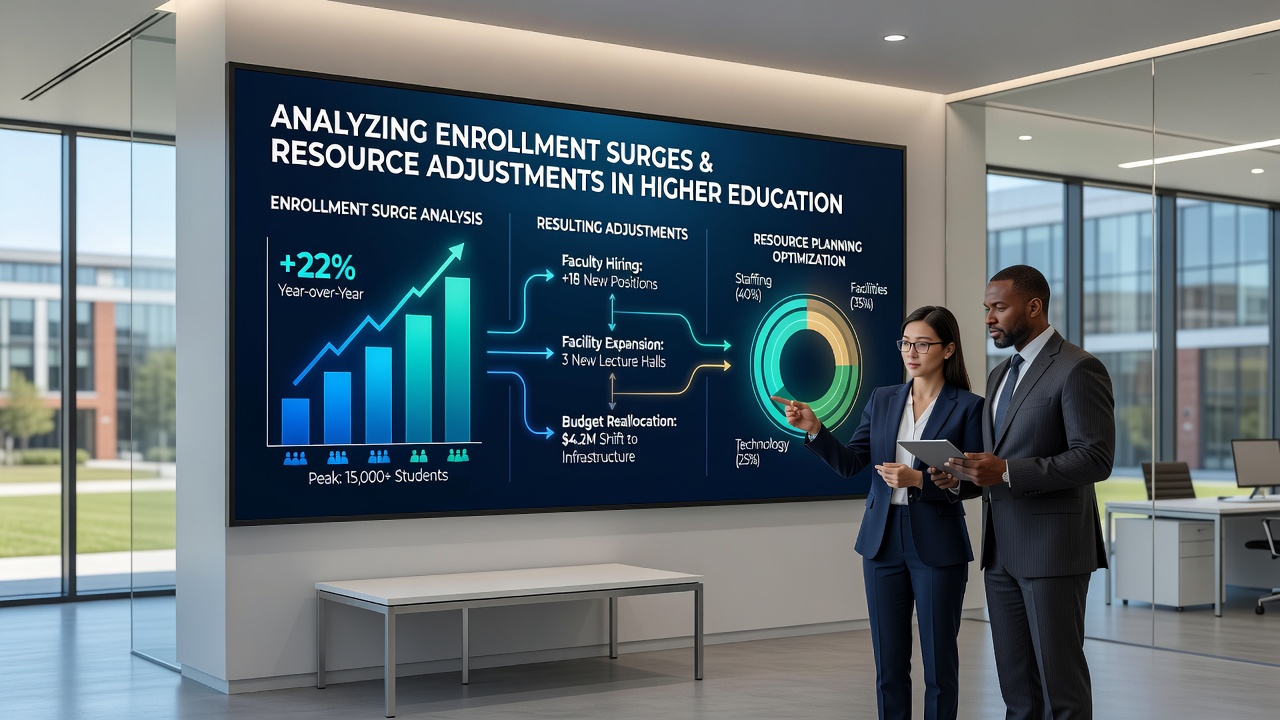
Enrollment figures in higher education have climbed steadily across multiple regions since the mid-2020s, and institutions have responded by reallocating budgets, expanding faculty lines, and rethinking physical and digital infrastructure. Data from national statistical agencies indicate that undergraduate and graduate programs in health sciences, computer engineering, and environmental studies saw the sharpest increases, while some humanities departments experienced more modest growth or stabilization. These patterns have forced administrators to adjust hiring cycles, classroom scheduling, and capital projects on timelines that once stretched across five or ten years but now compress into two or three.
Tracking the Numbers Behind the Surge
Reports released in October 2026 from the National Center for Education Statistics documented a 7 percent overall rise in first-time enrollment at public four-year institutions compared with 2024 figures, with certain states posting double-digit jumps in specific disciplines. International student numbers also recovered faster than expected after earlier visa disruptions, adding pressure on housing and support services. Observers note that community colleges absorbed a large share of the new domestic students who began their studies closer to home before transferring, which in turn shifted articulation agreements and credit-transfer policies between two-year and four-year campuses.
Researchers at the OECD have tracked similar trends across member countries, where demand for credentials tied to green technology and digital infrastructure outpaced supply in many labor markets. Those patterns prompted ministries of education in several nations to approve emergency funding packages that universities then used to retrofit laboratories and purchase simulation equipment. The result has been a noticeable rebalancing of resources away from under-subscribed programs and toward fields where employers have posted sustained recruitment needs.
How Institutions Have Reallocated Resources
University systems facing enrollment growth have accelerated faculty recruitment in high-demand areas while implementing early-retirement incentives in others, allowing budgets to flex without large net increases in payroll. Capital planning offices have converted underused lecture halls into active-learning spaces and hybrid studios, moves that accommodate larger cohorts without immediate construction of new buildings. Library acquisitions budgets have shifted toward electronic databases and software licenses that support remote access for students who split time between campus and off-site internships.
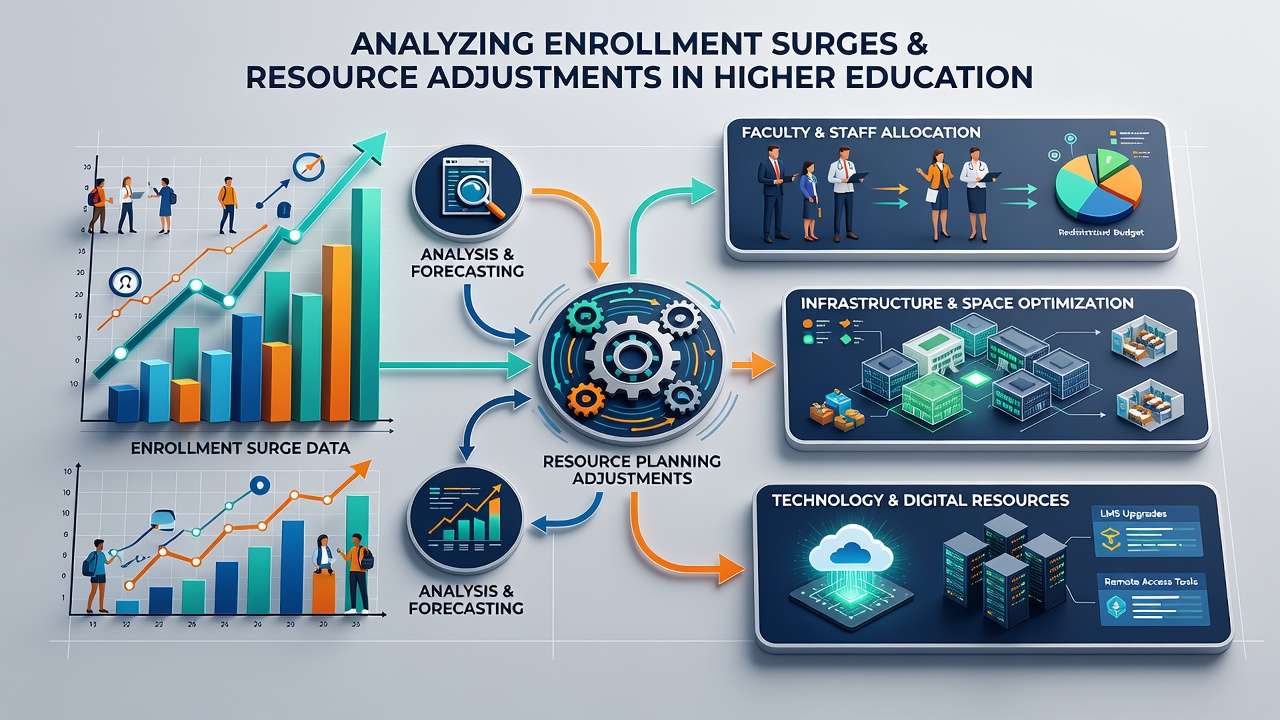
One public research university in the Midwest, for example, partnered with regional employers to co-fund applied-research centers, thereby reducing the institution's share of equipment costs while aligning curricula with workforce requirements. Similar arrangements have appeared in Australia and Canada, where provincial governments have tied portions of operating grants to documented enrollment growth in priority fields. These arrangements illustrate how resource planning now routinely incorporates multi-year enrollment projections rather than relying on historical averages alone.
Operational Adjustments and Their Timeline
By October 2026, several systems had already completed mid-cycle budget revisions that redirected maintenance funds toward technology upgrades and additional advising staff. Scheduling software has been updated to maximize room utilization during peak hours, and some campuses introduced staggered start times for laboratory sections to reduce equipment bottlenecks. Student-services divisions expanded mental-health counseling and career-placement capacity, recognizing that larger incoming classes bring proportionally higher demand for those supports.
Financial-aid offices have recalibrated packaging strategies to maintain yield rates among admitted students, because even modest enrollment shortfalls in certain programs can offset gains elsewhere. Procurement teams have negotiated longer-term contracts for cloud-computing services and laboratory consumables, locking in prices against anticipated volume increases. These steps reflect a broader recognition that enrollment surges rarely distribute evenly across departments or demographic groups, so planning tools must incorporate granular rather than aggregate forecasts.
Conclusion
Higher-education institutions continue to refine their resource-planning models in response to enrollment data that arrive at shorter intervals and greater detail than in previous decades. Adjustments in faculty deployment, facilities management, and inter-institutional partnerships have become standard practice rather than emergency measures. As new figures are released each autumn, administrators integrate those updates into rolling five-year plans that balance growth in select fields against steady or declining demand in others, ensuring that budgets and infrastructure keep pace with student choices and labor-market signals.